Teachers’ voices from the global south
Navigating chemical literacy through STEAM-PjBL in resource-limited Indonesian classrooms
DOI:
https://doi.org/10.32674/cw0wbr16Keywords:
STEAM education, project-based learning, chemical literacy, Global South, Teacher strategiesAbstract
This study examines how six chemistry teachers in Yogyakarta, Indonesia, implemented project-based STEAM learning to enhance chemical literacy and creativity within systemic constraints. Using a qualitative case study with semi- structured interviews analyzed thematically, teachers reported challenges such as limited time, inadequate laboratory facilities, uneven student readiness, and partial expertise in STEAM integration. They addressed these issues through virtual titrations, microscale buffer experiments, chemistry comics, natural indicators, and professional collaboration. Students demonstrated increased engagement, creativity, and critical reasoning, although macro–micro–symbolic translation remained difficult. The study introduces the R³ mechanism (Representations, Resources, and Rubrics) as vital for maintaining rigorous chemistry instruction in resource-limited environments, emphasizing both teacher agency and structural support.
References
Aina, J. K. (2022). STEM education in Nigeria: Development and challenges. Current Research in Language, Literature and Education, 3(9), 53–60. https://doi.org/10.9734/bpi/crlle/v3/2258C DOI: https://doi.org/10.9734/bpi/crlle/v3/2258C
Alpiona, V. (2025). Efektivitas model flipped classroom berbantuan visualisasi molekul 3d pada materi hidrokarbon untuk meningkatkan kompetensi representasi kimia
Ardiansyah, I., & Oktariani, O. (2024). Pengembangan media pembelajaran komik kimia berbasis green chemistry. Journal of Research and Education Chemistry, 6(1), 1–1. https://doi.org/10.25299/jrec.2024.vol6(1).14545 DOI: https://doi.org/10.25299/jrec.2024.vol6(1).14545
Biesta, G., Priestley, M., & Robinson, S. (2019). Talking about education: exploring the significance of teachers' talk for teacher agency. Journal of Curriculum Studies, 49, 38–54. https://doi.org/10.1080/00220272.2016.1205143 DOI: https://doi.org/10.4324/9781351008808-4
Braun, V., & Clarke, V. (2006). Using thematic analysis in psychology. Qualitative Research in Psychology, 3(2), 77–101. https://doi.org/10.1191/1478088706qp063oa DOI: https://doi.org/10.1191/1478088706qp063oa
Bruce, M. R., Bruce, A. E., & Walter, J. (2022). Creating representation in support of chemical reasoning to connect macroscopic and submicroscopic domains of knowledge. Journal of Chemical Education, 99(4), 1734–1746. https://doi.org/10.1021/acs.jchemed.1c00292 DOI: https://doi.org/10.1021/acs.jchemed.1c00292
Bybee, R. W. (2013). The case for STEM Education: Challenges and opportunities. NSTA Press.
Capraro, R. M. (2008). Project-based learning: an integrated science, technology, engineering, and mathematics (STEM) approach. Sense Publishers.
Carney, S. (2022). Reimagining our futures together: A new social contract for education: by UNESCO, Paris, UNESCO, 2021, 186 pages, ISBN 978-92-3-100478-0. Comparative Education, 58(4), 568–569. https://doi.org/10.1080/03050068.2022.2102326 DOI: https://doi.org/10.1080/03050068.2022.2102326
Caushi, K., Sevian, H., & Talanquer, V. (2021). Exploring variation in ways of thinking about and acting to control a chemical reaction. Journal of Chemical Education, 98(12), 3714–3722. http://doi.org/10.1021/acs.jchemed.1c00902 DOI: https://doi.org/10.1021/acs.jchemed.1c00902
Chien, Y. H., & Chu, P. Y. (2018). The different learning outcomes of high school and college students on a 3D-printing steam engineering design curriculum. International Journal of Science and Mathematics Education, 16(6), 1047–1064. https://doi.org/10.1007/s10763-017-9832-4 DOI: https://doi.org/10.1007/s10763-017-9832-4
Chisom, O. N., Unachukwu, C. C., & Osawaru, B. (2024). STEM education advancements in African contexts: A comprehensive review. World Journal of Advanced Research and Reviews, 21(1), 145–160. https://doi.org/10.30574/wjarr.2024.21.1.2719 DOI: https://doi.org/10.30574/wjarr.2024.21.1.2719
Chu, M. (2025). Revolutionizing STEM education through emerging technologies. American Journal of STEM Education, 10, 71–80. https://doi.org/10.32674/bkw4ty40 DOI: https://doi.org/10.32674/bkw4ty40
Conradty, C., & Bogner, F. X. (2020). STEAM teaching professional development works: Effects on students’ creativity and motivation. Smart Learning Environments, 7(1), 26. https://doi.org/10.1186/s40561-020-00132-9 DOI: https://doi.org/10.1186/s40561-020-00132-9
Creswell, J. W., & Poth, C. N. (2016). Qualitative Inquiry and research design: choosing among five approaches. Sage Publications.
Cross, C. J., Hubbard, K., Long, J., Church, B., & Wagnon, A. E. (2026). Balancing strengths and challenges in rural STEM preservice teacher education: A conceptual framework. American Journal of STEM Education, 18, 1–14. https://doi.org/10.32674/r4fb9856 DOI: https://doi.org/10.32674/r4fb9856
Dewey, J. (1986). Experience and education. Taylor & Francis. DOI: https://doi.org/10.1080/00131728609335764
Dianti, S. A. T., Pamelasari, S. D., & Hardianti, R. D. (2023). Penerapan pembelajaran berbasis proyek dengan pendekatan stem terhadap peningkatan kemampuan literasi sains siswa. Proceeding Seminar Nasional IPA. https://proceedings.unnes.ac.id/snipa/article/view/2325
English, L. D. (2019). Learning while designing in a fourth-grade integrated STEM problem. International Journal of Technology and Design Education, 29(5), 1011–1032. https://doi.org/10.1007/s10798-018-9482-z DOI: https://doi.org/10.1007/s10798-018-9482-z
Gay, G. (2018). Culturally responsive teaching: Theory, research, and practice. Teachers College Press.
Ghimire, P., & Pant, B. P. (2025). Exploring project-based group learning: Lessons from a case study on engagement and mentorship. American Journal of STEM Education, 8, 85–102. https://doi.org/10.32674/epng8z86 DOI: https://doi.org/10.32674/epng8z86
Gilbert, J. K., & Treagust, D. F. (2009). Multiple representations in chemical education. Springer. DOI: https://doi.org/10.1007/978-1-4020-8872-8
Golegou, E., Wallace, M., & Peppas, K. (2026). Student-centered pedagogies for 21st-century STEM: A comparative review and implementation guide. American Journal of STEM Education, 18, 83–124. https://doi.org/10.32674/qnh67005 DOI: https://doi.org/10.32674/qnh67005
Handayani, F. L., Putri, D. A., Fahrunisa, S. A., Rizqi, S. A., Munbaits, T. B., Julyani, T. N., & Sukmawati, W. (2023). Analisis penggunaan teknologi pada pembelajaran IPA di sekolah dasar. Jurnal Teknologi Pendidikan, 1(2), 7–7. https://doi.org/10.47134/jtp.v1i2.105 DOI: https://doi.org/10.47134/jtp.v1i2.105
Henriksen, D., Mehta, R., & Mehta, S. (2019). Design thinking gives steam to teaching: A framework that breaks disciplinary boundaries. Springer. http://doi.org/10.1007/978-3-030-04003-1_4 DOI: https://doi.org/10.1007/978-3-030-04003-1_4
Herro, D., & Quigley, C. (2017). Exploring teachers’ perceptions of steam teaching through professional development: Implications for teacher educators. Professional Development in Education, 43(3), 416–438. https://doi.org/10.1080/19415257.2016.1205507 DOI: https://doi.org/10.1080/19415257.2016.1205507
Hofstein, A., & Kind, P. M. (2011). Learning in and from science laboratories. Second International Handbook of Science Education. http://doi.org/10.1007/978-1-4020-9041-7_15 DOI: https://doi.org/10.1007/978-1-4020-9041-7_15
Imansari, M., Sudarmin, S., & Sumarni, W. (2018). Analisis literasi kimia peserta didik melalui pembelajaran inkuiri terbimbing bermuatan etnosains. Jurnal Inovasi Pendidikan Kimia, 12(2). https://journal.unnes.ac.id/nju/JIPK/article/viewFile/15480/8050
Johnstone, A. H. (1991). Why is science difficult to learn? Things are seldom what they seem. Journal of Computer-Assisted Learning, 7(2), 75–83. https://doi.org/10.1111/j.1365-2729.1991.tb00230.x DOI: https://doi.org/10.1111/j.1365-2729.1991.tb00230.x
Kaewhanam, P., Kaewhanam, K., Pongsiri, A., Intanin, J., & Kamolkhet, S. (2023). Digital Learning Strategies in Thailand Government: Practices and Policies. International Online Journal of Education and Teaching, 10(3), 2090–2097.
Kemechian, T., Sigahi, T. F., Martins, V. W., Rampasso, I. S., De Moraes, G. H. S. M., Serafim, M. P., Filho, W. L., & Anholon, R. (2023). Towards the SDGs for gender equality and decent work: Investigating major challenges faced by Brazilian women in STEM careers with international experience. Discover Sustainability, 4(1), 11. https://doi.org/10.1007/s43621-023-00125-x DOI: https://doi.org/10.1007/s43621-023-00125-x
Kokotsaki, D., Menzies, V., & Wiggins, A. (2016). Project-based learning: a review of the literature. Improving Schools, 19(3), 267–277. https://doi.org/10.1177/1365480216659733 DOI: https://doi.org/10.1177/1365480216659733
Kozma, R., & Russell, J. (2005). Students becoming chemists: Developing representational competence. Visualization in Science Education, 1, 121–146. https://doi.org/10.1007/1-4020-3613-2_8 DOI: https://doi.org/10.1007/1-4020-3613-2_8
Krajcik, J., & Shin, N. (2014). Project-based learning. Cambridge University Press. https://doi.org/10.1017/CBO9781139519526.018 DOI: https://doi.org/10.1017/CBO9781139519526.018
Liao, C. (2016). From interdisciplinary to transdisciplinary: An arts-integrated approach to STEM education. ART education, 69(6), 44–49. https://doi.org/10.1080/00043125.2016.1224873 DOI: https://doi.org/10.1080/00043125.2016.1224873
Lou, S.-J., Tsai, H.-Y., Tseng, K.-H., & Shih, R.-C. (2014). Effects of implementing STEM-I project-based learning activities for female high school students. International Journal of Distance Education Technologies (IJDET), 12(1), 52–73. https://doi.org/10.4018/ijdet.2014010104 DOI: https://doi.org/10.4018/ijdet.2014010104
McDaniel, A. (2025). Integrating artificial intelligence in STEM education: enhancing learning through smart technologies. American Journal of STEM Education, 7, 1–10. https://doi.org/10.32674/6s0qz548 DOI: https://doi.org/10.32674/6s0qz548
McDaniel, A. (2026). Integrating the" A" in STEAM: Enhancing STEM learning through stop motion animation. American Journal of STEM Education. https://doi.org/10.32674/tta28c71 DOI: https://doi.org/10.32674/tta28c71
Monta, E. R., & Perdio, A. C. (2025). Laboratory-based science instruction in public schools: Insights from teachers’ experiences and implications for contextualized interventions in Bataan, Philippines. EPRA International Journal of Research & Development (IJRD), 10(6), 322–328. https://doi.org/10.36713/epra22103 DOI: https://doi.org/10.36713/epra22103
Musyarofah, A. A. S., Anggraini, A. L., Sudarti, S., Handayani, R. a. D., Jamhari, M., & Haeruddin, H. (2023). Analysis of the comparison of science literacy skills of students at MTS Nurul Huda Situbondo in solving PISA science problems. EDUKASIA Jurnal Pendidikan dan Pembelajaran, 4(2), 2507–2516. https://doi.org/10.62775/edukasia.v4i2.619 DOI: https://doi.org/10.62775/edukasia.v4i2.619
Perignat, E., & Katz-Buonincontro, J. (2019). STEAM in practice and research: An integrative literature review. Thinking skills and creativity, 31, 31–43. https://doi.org/10.1016/j.tsc.2018.10.002 DOI: https://doi.org/10.1016/j.tsc.2018.10.002
OECD. (2019). PISA 2018 results (Volume I): What students know and can do. OECD Publishing. https://doi.org/10.1787/5f07c754-en DOI: https://doi.org/10.1787/5f07c754-en
Prajoko, S., Sukmawati, I., Maris, A., & Wulanjani, A. (2023). Project-based learning (PBL) model with STEM approach on students’ conceptual understanding and creativity. Jurnal Pendidikan IPA Indonesia, 12(3), 401–409. http://doi.org/10.15294/jpii.v12i3.42973 DOI: https://doi.org/10.15294/jpii.v12i3.42973
Pramashela, A. D., Suwono, H., Sulisetijono, S., & Wulanningsih, U. A. (2023). The influence of project-based learning integrated STEAM on the creative thinking skills. Bioedukasi, 21(2), 138–143. DOI: https://doi.org/10.19184/bioedu.v21i2.39737
Prasetyawati, A. N., & Astuti, A. P. (2025). Implementation project based learning-STEAM on student’s creative thinking skill in Indonesia: A bibliometric review. Journal of Lesson Study in Teacher Education, 4(1), 66–75. https://doi.org/10.51402/jlste.v4i1.158 DOI: https://doi.org/10.51402/jlste.v4i1.158
Priestley, M. R., Biesta, G., & Robinson, S. (2015). Teacher agency: An ecological approach. Bloomsbury Publishing. https://doi.org/10.5040/9781474219426 DOI: https://doi.org/10.5040/9781474219426
Quigley, C. F., Herro, D., & Jamil, F. M. (2017). Developing a conceptual model of STEAM teaching practices. School science and mathematics, 117(1-2), 1–12. https://doi.org/10.1111/ssm.12201 DOI: https://doi.org/10.1111/ssm.12201
Rahmawati, R., Subarkah, C. Z., & Sukmawardani, Y. (2025). Pengaruh pembelajaran berbasis multiple representation untuk meningkatkan pemahaman konsep kimia pada materi laju reaksi. Eduproxima: Jurnal Ilmiah Pendidikan IPA, 7(3), 1110–1117. https://doi.org/10.29100/.v7i3.7380 DOI: https://doi.org/10.29100/.v7i3.7380
Rahmawati, Y. (2023). Efektivitas Penggunaan E-Modul berbasis project based learning terhadap kompetensi peserta didik pada kurikulum merdeka belajar. EDUKASIA: Jurnal Pendidikan dan Pembelajaran, 4(1), 293–300. https://doi.org/10.62775/edukasia.v4i1.260 DOI: https://doi.org/10.62775/edukasia.v4i1.260
Retno, R. S., Purnomo, P., Hidayat, A., & Mashfufah, A. (2025). Conceptual framework design for STEM-integrated project-based learning (PjBL-STEM) for elementary schools. Asian Education and Development Studies, 14(3), 579–604. https://doi.org/10.1108/AEDS-08-2024-0188 DOI: https://doi.org/10.1108/AEDS-08-2024-0188
Riyadi, A. S., Alimah, S., & Saptono, S. (2020). Effectiveness of project based learning model on collaborative ability and critical thinking of senior high school students. Journal of Innovative Science Education, 9(2), 210–219.
Riyadi, R., Sarwanto, S., Triyani, S., & Saddhono, K. (2025). STEAM-A (science, technology, engineering, arts, mathematics, animation) berbasis kearifan lokal di sekolah dasar. Tren Digital Publishing.
Sampath Kumar, B., & Basavaraja, M. (2016). Computer access and use: Understanding the expectations of Indian rural students. Quality assurance in education, 24(1), 56–69. https://doi.org/10.1108/QAE-03-2014-0012 DOI: https://doi.org/10.1108/QAE-03-2014-0012
Sayed, Y., & Sing, M. (2020). Evidence and education policy making in south africa during covid-19: promises, researchers and policymakers in an age of unpredictability. Southern African Review of Education with Education with Production, 26(1), 20–39. https://hdl.handle.net/10520/ejc-sare-v26-n1-a3
Sevilla, M. P., Luengo-Aravena, D., & Farías, M. (2023). Gender gap in STEM pathways: The role of secondary curricula in a highly differentiated school system—the case of Chile. International Journal of STEM Education, 10(1), 58. https://doi.org/10.1186/s40594-023-00450-7 DOI: https://doi.org/10.1186/s40594-023-00450-7
Stojanovska, M., Petruševski, V. M., & Šoptrajanov, B. (2017). Study of the use of the three levels of thinking and representation. Contributions, Section of Natural, Mathematical and Biotechnical Sciences, 35(1). https://pdfs.semanticscholar.org/7b30/7ade576c21d7f410ee69b4ab5dbb1e4b1237.pdf DOI: https://doi.org/10.20903/csnmbs.masa.2014.35.1.52
Suchikova, Y., & Kovachov, S. (2024). Nanoart in STEAM education: Combining the microscopic and the creative. Journal of Physics: Conference Series, 2871. https://doi.org/10.1088/1742-6596/2871/1/012024 DOI: https://doi.org/10.1088/1742-6596/2871/1/012024
Sumarni, W., Wijayati, N., & Supanti, S. (2019). Analysis kemampuan kognitif dan berpikir kreatif siswa melalui pembelajaran berbasis proyek perpendekatan STEM. Jurnal Pembelajaran Kimia OJS, 4(1), 18–30. http://doi.org/10.17977/um026v4i12019p018 DOI: https://doi.org/10.17977/um026v4i12019p018
Susanti, R. S., Kurniasih, D., & Hadiarti, D. (2017). Pengembangan ensiklopedia peralatan laboratorium kimia sebagai sumber belajar siswa sma negeri 10 pontianak. Ar-Razi Jurnal Ilmiah, 7(2). http://doi.org/10.29406/ar-r.v7i2.1877 DOI: https://doi.org/10.29406/ar-r.v7i2.1877
Talanquer, V. (2011). Macro, submicro, and symbolic: The many faces of the chemistry “triplet”. International Journal of Science Education, 33(2), 179–195. https://doi.org/10.1080/09500690903386435 DOI: https://doi.org/10.1080/09500690903386435
Tarhan, L., & Acar-Sesen, B. (2013). Problem based learning in acids and bases: Learning achievements and students’ beliefs. Journal of Baltic Science Education, 12(5), 565–578. http://doi.org/10.33225/jbse/13.12.565 DOI: https://doi.org/10.33225/jbse/13.12.565
Thomas, J. W. (2000). A review of research on project-based learning. The Autodesk Foundation.
Toma, R. B., & Greca, I. M. (2018). The effect of integrative STEM instruction on elementary students’ attitudes toward science. Eurasia Journal of Mathematics, Science and Technology Education, 14(4), 1383–1395. https://doi.org/10.29333/ejmste/83676 DOI: https://doi.org/10.29333/ejmste/83676
Tuong, H. A., Nam, P. S., Hau, N. H., Tien, V. T. B., Lavicza, Z., & Hougton, T. (2023). Utilizing STEM-based practices to enhance mathematics teaching in Vietnam: Developing students' real-world problem solving and 21st century skills. JOTSE: Journal of Technology and Science Education, 13(1), 73–91. http://doi.org/10.3926/jotse.1790 DOI: https://doi.org/10.3926/jotse.1790
Vygotsky, L. S. (1978). Mind in society: The development of higher psychological processes. Harvard University Press.
Yakman, G., & Lee, H. (2012). Exploring the exemplary STEAM education in the US as a practical educational framework for Korea. Journal of the Korean Association for Science Education, 32(6), 1072–1086. http://doi.org/10.14697/jkase.2012.32.6.1072 DOI: https://doi.org/10.14697/jkase.2012.32.6.1072
Zahro, N., & Lutfi, A. (2021). Students’ well-being and game implementation in learning chemistry in the Merdeka Belajar era. Jurnal Pendidikan Kimia Indonesia, 5(1), 34–43. http://doi.org/10.23887/jpk.v5i1.30127 DOI: https://doi.org/10.23887/jpk.v5i1.30127
Additional Files
Published
Issue
Section
License
Copyright (c) 2026 Farhatul Uyun, Jamil Suprihatiningrum

This work is licensed under a Creative Commons Attribution 4.0 International License.
Copyright (c) [year] [author]
This work is licensed under a Creative Commons Attribution 4.0 International License.
This license permits unrestricted use, distribution, and reproduction in any medium, provided the original author and source are credited. https://creativecommons.org/licenses/by/4.0
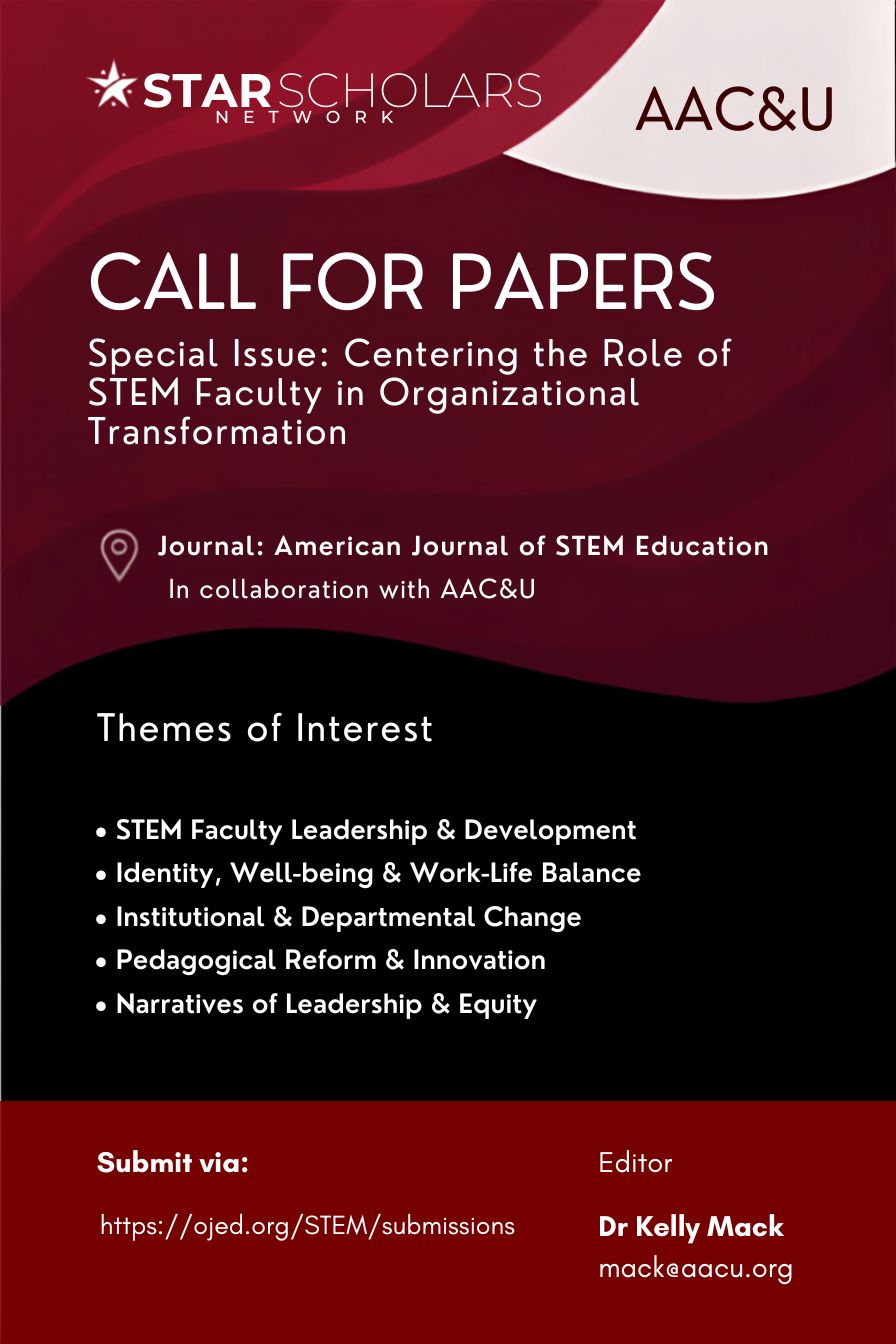
 Call for Special Issue Proposals