AI-enhanced pedagogical practices and mathematical language proficiency in STEM education
DOI:
https://doi.org/10.32674/6h0e3376Keywords:
AI-enhanced pedagogical practices, digital literacy, learning engagement, mathematical language proficiency, STEM education, structural equation modeling, SEM, AEPPAbstract
This study investigates the effectiveness of AI-enhanced pedagogical practices on improving the mathematical language proficiency of senior high school students in Ghana. The current research adopted a quantitative cross-sectional design, where the structural equation modeling approach was used on a sample size of 360 participants, to investigate digital literacy and learning engagement as partial mediators. As expected, results from this study show that AEPP, DL, and LE are statistically significant positive predictors of students’ MLP. Additionally, digital literacy and learning engagement play a mediating role in the relationship between the AI-supported instruction and the proficiency outcomes. The findings highlighted the importance of integrating adaptive AI tools to enhance the digital literacy of the students as well as their learning engagement to improve the mathematical communication and reasoning of the senior high school students.
References
Appleton, J. J., Christenson, S. L., & Furlong, M. J. (2008). Student engagement with school: Critical conceptual and methodological issues of the construct. Psychology in the Schools, 45(5), 369–386. https://doi.org/10.1002/pits.20303 DOI: https://doi.org/10.1002/pits.20303
Arthur, Y. D., De Vittori, T., Welcome, N. B., Dogbe, C. S. K., & Asare, B. (2025). Enhancing TVET students’ interest in mathematics through the history of mathematics and self-efficacy. Journal of Applied Research in Higher Education. https://doi.org/10.1108/JARHE-05-2024-0238 DOI: https://doi.org/10.1108/JARHE-05-2024-0238
Asare, B., & Boateng, F. O. (2025). Self-awareness and self-regulatory learning as mediators between ChatGPT usage and pre-service mathematics teachers’ self-efficacy. Journal of Pedagogical Research. https://doi.org/10.33902/JPR.202530637 DOI: https://doi.org/10.33902/JPR.202530637
Asare, B., Dissou Arthur, Y., & Adu Obeng, B. (2025). Mathematics self-belief and mathematical creativity of university students: the role of problem-solving skills. Cogent Education, 12(1). https://doi.org/10.1080/2331186X.2025.2456438 DOI: https://doi.org/10.1080/2331186X.2025.2456438
Awofala, A. O., Olaguro, M., Fatade, A. O., & Arigbabu, A. A. (2024). Learning engagement as a predictor of performance in mathematics among Nigerian senior secondary school students. International Journal of Innovation in Science and Mathematics Education, 32(3). https://doi.org/10.30722/IJISME.32.03.004 DOI: https://doi.org/10.30722/IJISME.32.03.004
Bandura, A. (1986). The explanatory and predictive scope of self-efficacy theory. Journal of Social and Clinical Psychology, 4(3), 359–373. https://doi.org/10.1521/jscp.1986.4.3.359 DOI: https://doi.org/10.1521/jscp.1986.4.3.359
Boadu, S. K., & Boateng, F. O. (2024). Enhancing students’ achievement in mathematics education in the 21st century through technology integration, collaborative learning, and student motivation: The mediating role of student interest. Eurasia Journal of Mathematics, Science and Technology Education, 20(11). https://doi.org/10.29333/ejmste/15622 DOI: https://doi.org/10.29333/ejmste/15622
Boateng, O. F., Davor, I., & Appiah Manu, C. (2026). Innovative teaching methods supported by artificial intelligence and students’ mathematical problem-solving: the mediating role of student engagement. EIKI Journal of Effective Teaching Methods, 4(1). https://doi.org/10.59652/7tsj5730 DOI: https://doi.org/10.59652/7tsj5730
Busnawir, B., Kodirun, K., Sumarna, N., & Alfari, Z. (2023). Analysis of the effect of social skills and disposition of digital literacy on mathematical literacy ability. European Journal of Educational Research, 12(1), 59–69. https://doi.org/10.12973/eu-jer.12.1.59 DOI: https://doi.org/10.12973/eu-jer.12.1.59
Chigona, A., & Chigona, W. (2010). Capability approach on pedagogical use of ICT in schools. The Journal for Transdisciplinary Research in Southern Africa, 6(1). https://doi.org/10.4102/td.v6i1.117 DOI: https://doi.org/10.4102/td.v6i1.117
Davor, I., Asare, C., & Abanamu, A. (2026). Predictors of students’ mathematics problem-solving skills: Feedback, beliefs, learning support, and technology. Sustainable and Pedagogical Technologies, 2(2), e43735. https://doi.org/10.33902/SPT.202643735 DOI: https://doi.org/10.33902/SPT.202643735
Davor, I., Boateng, F. O., & Akweittey, E. (2026). Modeling the impact of teachers’ digital pedagogical content knowledge (DPACK) on instructional quality and student mathematics achievement. Frontiers in Education, 11, 1807792. https://doi.org/10.3389/feduc.2026.1807792 DOI: https://doi.org/10.3389/feduc.2026.1807792
Davor, I., Boateng, F. O., & Lotey, E. K. (2025). The mediating role of metacognitive thinking in the relationship between attributional beliefs, academic buoyancy, error-management mindset, and mathematics achievement. European Journal of Mathematics and Science Education, 6(4), 239–253. https://doi.org/10.12973/ejmse.6.4.239 DOI: https://doi.org/10.12973/ejmse.6.4.239
Davor, I., Boateng, F. O., Osei-Wusu, F., Osei Bosompem, A., Osei-Tutu, P., & Hamenu, J. (2026). The role of metacognitive awareness as mediator and moderator in the nexus between self-regulated learning and mathematics achievement. Cogent Education, 13(1). https://doi.org/10.1080/2331186X.2026.2661434 DOI: https://doi.org/10.1080/2331186X.2026.2661434
Davor, I., Dawmah, P., & Larbi, E. (2026). An investigation into senior high school students’ performance and difficulties in proving Euclidean geometry in mathematics curriculum: Evidence from Ghana. Contemporary Mathematics and Science Education, 7(1), ep26005. https://doi.org/10.30935/conmaths/17990 DOI: https://doi.org/10.30935/conmaths/17990
Eslit, E. (2024). AI-Enhanced Language Learning: Bridging Cultures and Breaking Barriers. https://doi.org/10.20944/preprints202411.1866.v1 DOI: https://doi.org/10.20944/preprints202411.1866.v1
Essien, A. A. (2010). Investigating proficiency in the language of instruction as a means of improving mathematical proficiency in a multilingual classroom. Education as Change, 14(2), 169–185. https://doi.org/10.1080/16823206.2010.518006 DOI: https://doi.org/10.1080/16823206.2010.518006
Fung, F., Tan, C. Y., & Chen, G. (2018). Student engagement and mathematics achievement: Unraveling main and interactive effects. Psychology in the Schools, 55(7), 815–831. https://doi.org/10.1002/pits.22139 DOI: https://doi.org/10.1002/pits.22139
Gyimah, I. O., Ackon, J., & Frimpong, K. O. (2026). Metacognitive knowledge and mathematics engagement among senior high school students: mediating role of cognitive flexibility. International Journal of Mathematics and Mathematics Education, 4(1), 40–54. https://doi.org/10.56855/ijmme.v4i1.1866 DOI: https://doi.org/10.56855/ijmme.v4i1.1866
Hair, J. F., Risher, J. J., Sarstedt, M., & Ringle, C. M. (2019). When to use and how to report the results of PLS-SEM. European Business Review, 31(1), 2–24. https://doi.org/10.1108/EBR-11-2018-0203 DOI: https://doi.org/10.1108/EBR-11-2018-0203
Hair, J. F., Sarstedt, M., Ringle, C. M., & Mena, J. A. (2012). An assessment of the use of partial least squares structural equation modeling in marketing research. Journal of the Academy of Marketing Science, 40(3), 414–433. https://doi.org/10.1007/s11747-011-0261-6 DOI: https://doi.org/10.1007/s11747-011-0261-6
Hayes, A. F., & Preacher, K. J. (2014). Statistical mediation analysis with a multicategorical independent variable. British Journal of Mathematical and Statistical Psychology, 67(3), 451–470. https://doi.org/10.1111/bmsp.12028 DOI: https://doi.org/10.1111/bmsp.12028
İlhan, A., Aslaner, R., & Yaşaroğlu, C. (2025). Development of digital literacy skills of 21st century mathematics teachers and prospective teachers through technology-assisted education. Education and Information Technologies, 30(8), 10837–10862. https://doi.org/10.1007/s10639-024-13283-w DOI: https://doi.org/10.1007/s10639-024-13283-w
Krejcie, R. V., & Morgan, D. W. (1970). Determining sample size for research activities. Educational and Psychological Measurement, 30(3), 607–610. https://doi.org/10.1177/001316447003000308 DOI: https://doi.org/10.1177/001316447003000308
Kristandl, G. (2025). Embracing generative AI in education: a global view on AI anxiety through digital literacy. In Emancipatory Education Without Boundaries in the Age of Neoliberalism, Artificial Intelligence and Digital Learning Platforms (pp. 57–72). Springer. https://doi.org/10.1007/978-3-031-97999-6_5 DOI: https://doi.org/10.1007/978-3-031-97999-6_5
Antipuesto, J. L., & Tan, D. A. (2023). Students’ academic performance and engagement in mathematics via blended learning. American Journal of Educational Research, 11(4), 235–240. https://doi.org/10.12691/education-11-4-7 DOI: https://doi.org/10.12691/education-11-4-7
Leon, C., Lipuma, J., & Oviedo-Torres, X. (2025). Artificial intelligence in STEM education: a transdisciplinary framework for engagement and innovation. Frontiers in Education, 10. https://doi.org/10.3389/feduc.2025.1619888 DOI: https://doi.org/10.3389/feduc.2025.1619888
Li, L., Tong, Y., Wei, L., & Yang, S. (2022). Digital technology-enabled dynamic capabilities and their impacts on firm performance: Evidence from the COVID-19 pandemic. Information and Management, 59(8). https://doi.org/10.1016/j.im.2022.103689 DOI: https://doi.org/10.1016/j.im.2022.103689
Lijie, Z., Zongzhao, M., & Ying, Z. (2020). The influence of mathematics attitude on academic achievement: intermediary role of mathematics learning engagement. Jurnal Cendekia: Jurnal Pendidikan Matematika, 4(2), 460–467. https://doi.org/10.31004/cendekia.v4i2.253 DOI: https://doi.org/10.31004/cendekia.v4i2.253
Liu, J., Keane, T., Sun, D., Yang, Y., & Yang, Y. (2025). Design and evaluation of ChatGPT-MWPS: an AI-enhanced learning system for improving primary students’ mathematical word problem solving. Smart Learning Environments, 12(1), 68. https://doi.org/10.1186/s40561-025-00419-9 DOI: https://doi.org/10.1186/s40561-025-00419-9
Marsh, H. W., Guo, J., Dicke, T., Parker, P. D., & Craven, R. G. (2020). Confirmatory factor analysis (CFA), exploratory structural equation modeling (ESEM), and set-ESEM: optimal balance between goodness of fit and parsimony. Multivariate Behavioral Research, 55(1), 102–119. https://doi.org/10.1080/00273171.2019.1602503 DOI: https://doi.org/10.1080/00273171.2019.1602503
Martin, A. J., & Dowson, M. (2009). Interpersonal relationships, motivation, engagement, and achievement: yields for theory, current issues, and educational practice. Review of Educational Research, 79(1), 327–365. https://doi.org/10.3102/0034654308325583 DOI: https://doi.org/10.3102/0034654308325583
Novita, R., & Herman, T. (2021). Digital technology in learning mathematical literacy, can it helpful? Journal of Physics: Conference Series, 1776(1), 012027. https://doi.org/10.1088/1742-6596/1776/1/012027 DOI: https://doi.org/10.1088/1742-6596/1776/1/012027
Podsakoff, P. M., MacKenzie, S. B., & Podsakoff, N. P. (2012). Sources of method bias in social science research and recommendations on how to control it. Annual Review of Psychology, 63(1), 539–569. https://doi.org/10.1146/annurev-psych-120710-100452 DOI: https://doi.org/10.1146/annurev-psych-120710-100452
Prediger, S., Wilhelm, N., Büchter, A., Gürsoy, E., & Benholz, C. (2018). Language proficiency and mathematics achievement. Journal Für Mathematik-Didaktik, 39(S1), 1–26. https://doi.org/10.1007/s13138-018-0126-3 DOI: https://doi.org/10.1007/s13138-018-0126-3
Sterner, P., Pargent, F., Deffner, D., & Goretzko, D. (2024). A causal framework for the comparability of latent variables. Structural Equation Modeling, 31(5), 747–758. https://doi.org/10.1080/10705511.2024.2339396 DOI: https://doi.org/10.1080/10705511.2024.2339396
Sung, Y. T., Chang, K. E., & Liu, T. C. (2016). The effects of integrating mobile devices with teaching and learning on students’ learning performance: A meta-analysis and research synthesis. Computers and Education, 94, 252–275. https://doi.org/10.1016/j.compedu.2015.11.008 DOI: https://doi.org/10.1016/j.compedu.2015.11.008
Kotsis, K. T. (2025). From potential to practice: rethinking STEM education through artificial intelligence. International Journal of Advanced Multidisciplinary Research and Studies, 5(5), 613–617. https://doi.org/10.62225/2583049X.2025.5.5.4972 DOI: https://doi.org/10.62225/2583049X.2025.5.5.4972
Wolf, E. J., Harrington, K. M., Clark, S. L., & Miller, M. W. (2013). Sample size requirements for structural equation models. Educational and Psychological Measurement, 73(6), 913–934. https://doi.org/10.1177/0013164413495237 DOI: https://doi.org/10.1177/0013164413495237
Xia, Y., & Yang, Y. (2019). RMSEA, CFI, and TLI in structural equation modeling with ordered categorical data: The story they tell depends on the estimation methods. Behavior Research Methods, 51(1), 409–428. https://doi.org/10.3758/s13428-018-1055-2 DOI: https://doi.org/10.3758/s13428-018-1055-2
Yadav, S. (2025). Reimagining education with advanced technologies: Transformative pedagogical shifts driven by artificial intelligence. In A. Mutawa (Ed.), Impacts of Generative AI on the Future of Research and Education (pp. 1–26). IGI Global Scientific Publishing. https://doi.org/10.4018/979-8-3693-0884-4.ch001 DOI: https://doi.org/10.4018/979-8-3693-0884-4.ch001
Yani T, A., Buyung, B., Rosmaiyadi, R., Marhayani, D. A., Nirawati, R., Triani, S. N., & Soeharto, S. (2025). Examining the relationship between mathematical literacy and digital literacy among pre-service mathematics teachers. Eurasia Journal of Mathematics, Science and Technology Education, 21(5), em2635. https://doi.org/10.29333/ejmste/16392 DOI: https://doi.org/10.29333/ejmste/16392
Additional Files
Published
Issue
Section
License
Copyright (c) 2026 Isaac Davor, Francis Ohene Boateng

This work is licensed under a Creative Commons Attribution 4.0 International License.
Copyright (c) [year] [author]
This work is licensed under a Creative Commons Attribution 4.0 International License.
This license permits unrestricted use, distribution, and reproduction in any medium, provided the original author and source are credited. https://creativecommons.org/licenses/by/4.0
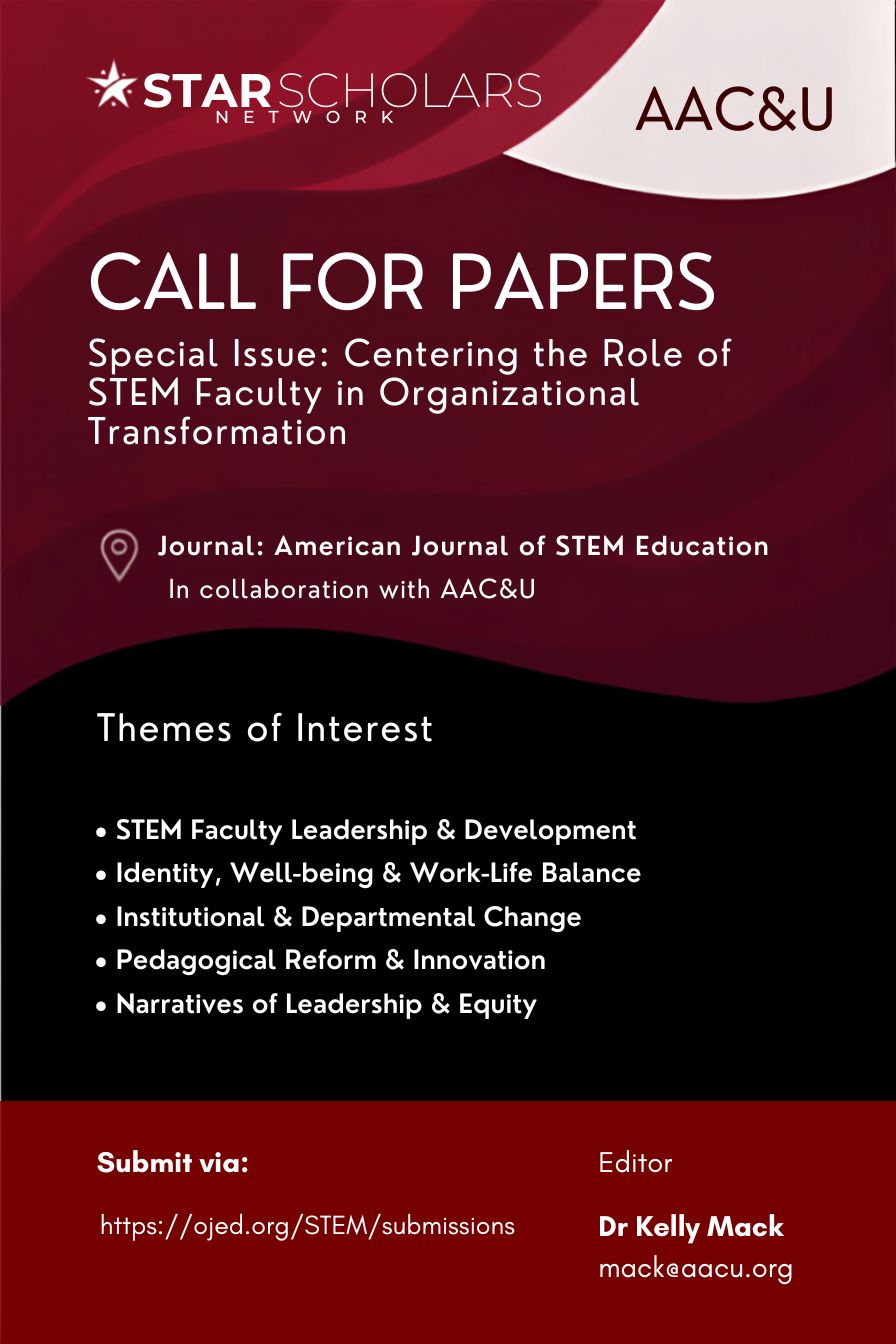
 Call for Special Issue Proposals