Effects of translanguaging on science literacy among high school students
DOI:
https://doi.org/10.32674/sjz1hy05Keywords:
cognitive engagement, language proficiency, multilingual education, science literacy, translanguagingAbstract
This study examined the effects of translanguaging on science literacy among Grade 10 students in a multilingual Philippine classroom. Seventy-eight participants were assigned to a translanguaging instruction group (n=39), integrating Filipino and English, or a monolingual instruction group (n=39). ANCOVA results showed significantly higher post-test science literacy scores for the translanguaging group (adjusted M=37.21, SE=0.64) than the monolingual group (adjusted M=29.13, SE=0.64), F(1,75)=79.64, p<.001, partial η²=.515, controlling for pre-test scores. No significant interaction with language proficiency emerged (F(1,73)=0.36, p=.549). Cognitive engagement also showed a significant main effect (F(2,70)=3.26, p=.044, partial η²=.085). Findings indicate that translanguaging enhances science literacy across proficiency levels, with cognitive engagement moderating outcomes, supporting its adoption in linguistically diverse classrooms.
References
Bravo-Sotelo, K. P. (2026). Future directions in Filipino education: Translanguaging practices in online mathematics learning environments. In A. Pandian, Vighnarajah, W. M. Lim, & H. F. Cheong (Eds.), Future of education in Asia. Springer. https://doi.org/10.1007/978-3-032-07285-6_9 DOI: https://doi.org/10.1007/978-3-032-07285-6_9
Canilao, M. L. E. N., & De Los Reyes, R. A. (2023). Translanguaging for empowerment and equity: Language practices in Philippine education and other public spaces. Springer. https://doi.org/10.1007/978-981-99-8589-0 DOI: https://doi.org/10.1007/978-981-99-8589-0
Cenoz, J., & Gorter, D. (2020). Teaching English through pedagogical translanguaging. World Englishes, 39(2), 300–311. https://doi.org/10.1111/weng.12462 DOI: https://doi.org/10.1111/weng.12462
Charamba, E. (2023). Translanguaging as bona fide practice in a multilingual South African science classroom. International Review of Education, 69(1), 31–50. https://doi.org/10.1007/s11159-023-09990-0 DOI: https://doi.org/10.1007/s11159-023-09990-0
Charamba, E., & Zano, K. (2019). Effects of translanguaging as an intervention strategy in a South African chemistry classroom. Bilingual Research Journal, 42(3), 291–307. https://doi.org/10.1080/15235882.2019.1631229 DOI: https://doi.org/10.1080/15235882.2019.1631229
Cummins, J. (1979). Linguistic interdependence and the educational development of bilingual children. Review of Educational Research, 49(2), 222–251. https://doi.org/10.3102/00346543049002222 DOI: https://doi.org/10.3102/00346543049002222
Cummins, J. (2021). Rethinking the education of multilingual learners: A critical analysis of theoretical concepts. Multilingual Matters. https://doi.org/10.21832/9781800413597 DOI: https://doi.org/10.21832/9781800413597
Familgan, G. T., & Adriano, T. Q. (2026). The nature of translanguaging affordances in multilingual secondary English class: A discourse analysis. International Journal of Research and Innovation in Social Science, 10(3). https://doi.org/10.47772/IJRISS.2026.100300389 DOI: https://doi.org/10.47772/IJRISS.2026.100300389
Flores, N., & Rosa, J. (2015). Undoing appropriateness: Raciolinguistic ideologies and language diversity in education. Harvard Educational Review, 85(2), 149–171. https://doi.org/10.17763/0017-8055.85.2.149 DOI: https://doi.org/10.17763/0017-8055.85.2.149
Fredricks, J. A., Blumenfeld, P. C., & Paris, A. H. (2004). School engagement: Potential of the concept, state of the evidence. Review of Educational Research, 74(1), 59–109. https://doi.org/10.3102/00346543074001059 DOI: https://doi.org/10.3102/00346543074001059
García, O., & Wei, L. (2014). Translanguaging: Language, bilingualism, and education. Palgrave Macmillan. https://doi.org/10.1057/9781137385765 DOI: https://doi.org/10.1057/9781137385765_4
García, O., Johnson, S. I., & Seltzer, K. (2017). The translanguaging classroom: Leveraging student bilingualism for learning. Caslon.
González-Howard, M., Andersen, S., Méndez Pérez, K., & Suárez, E. (2023). Language views for scientific sensemaking matter: A synthesis of research on multilingual students’ experiences with science practices through a translanguaging lens. Educational Researcher, 52(9), 570–579. https://doi.org/10.3102/0013189X231206172 DOI: https://doi.org/10.3102/0013189X231206172
Grapin, S. E., Ramos Borrego, M., & Navarro, V. G. (2025). Translanguaging in US K-12 science and engineering education: A review of the literature through the lens of equity. Journal of Research in Science Teaching, 62(1), 15–48. https://doi.org/10.1002/tea.22012 DOI: https://doi.org/10.1002/tea.22012
Hou, Z., Zhang, J., JadAllah, M., Enriquez-Andrade, A., Tran, H. T., & Ahmmed, R. (2025). Translanguaging practices in global K-12 science education settings: A systematic literature review. Journal of Research in Science Teaching, 62(1), 270–306. https://doi.org/10.1002/tea.22008 DOI: https://doi.org/10.1002/tea.22008
Karlsson, A., Nygård Larsson, P., & Jakobsson, A. (2019). Multilingual students’ use of translanguaging in science classrooms. International Journal of Science Education, 41(15), 2049–2069. https://doi.org/10.1080/09500693.2018.1477261 DOI: https://doi.org/10.1080/09500693.2018.1477261
Lee, O. (2021). Asset-oriented framing of science and language learning with multilingual learners. Journal of Research in Science Teaching, 58(7), 1073–1079. https://doi.org/10.1002/tea.21694 DOI: https://doi.org/10.1002/tea.21694
Lee, O., Grapin, S., & Haas, A. (2023). Teacher professional development programs integrating science and language with multilingual learners: A conceptual framework. Science Education, 107(5), 1302–1323. https://doi.org/10.1002/sce.21807 DOI: https://doi.org/10.1002/sce.21807
Lu, C., & So, W. W. M. (2023). Translanguaging in scientific practices: A study of high school teachers in English medium instruction inquiry-based science classrooms. International Journal of Science Education, 45(10), 850–871. https://doi.org/10.1080/09500693.2023.2175628 DOI: https://doi.org/10.1080/09500693.2023.2175628
Macawile, K. L. G., & Plata, S. M. (2022). Teachers’ perspectives on translanguaging as a pedagogical resource in senior high school English classes. Journal of English and Applied Linguistics, 1(2), Article 7. https://doi.org/10.59588/2961-3094.1022 DOI: https://doi.org/10.59588/2961-3094.1022
OECD. (2019). PISA 2018 assessment and analytical framework. OECD Publishing. https://doi.org/10.1787/b25efab8-en DOI: https://doi.org/10.1787/b25efab8-en
Otheguy, R., García, O., & Reid, W. (2015). Clarifying translanguaging and deconstructing named languages: A perspective from linguistics. Applied Linguistics Review, 6(3), 281–307. https://doi.org/10.1515/applirev-2015-0014 DOI: https://doi.org/10.1515/applirev-2015-0014
Paris, D., & Alim, H. S. (2017). Culturally sustaining pedagogies: Teaching and learning for justice in a changing world. Teachers College Press.
Ramos, K. A. (2026). Supporting multilingual learners through translanguaging pedagogy in U.S. K-12 STEM classrooms: A systematic meta-synthesis. Education Sciences, 16(3), 376. https://doi.org/10.3390/educsci16030376 DOI: https://doi.org/10.3390/educsci16030376
Rosa, J., & Flores, N. (2017). Unsettling race and language: Toward a raciolinguistic perspective. Language in Society, 46(5), 621–647. https://doi.org/10.1017/S0047404517000562 DOI: https://doi.org/10.1017/S0047404517000562
Tupas, R., & Martin, I. P. (2017). Bilingual and mother tongue-based multilingual education in the Philippines. In O. García, A. M. Y. Lin, & S. May (Eds.), Bilingual and multilingual education (3rd ed., pp. 247–260). Springer. https://doi.org/10.1007/978-3-319-02258-1_18 DOI: https://doi.org/10.1007/978-3-319-02258-1_18
Vygotsky, L. S. (1978). Mind in society: The development of higher psychological processes. Harvard University Press.
Wei, L. (2018). Translanguaging as a practical theory of language. Applied Linguistics, 39(1), 9–30. https://doi.org/10.1093/applin/amx039 DOI: https://doi.org/10.1093/applin/amx039

Additional Files
Published
Issue
Section
License
Copyright (c) 2026 Christian Genesis Guinto

This work is licensed under a Creative Commons Attribution 4.0 International License.
Copyright (c) [year] [author]
This work is licensed under a Creative Commons Attribution 4.0 International License.
This license permits unrestricted use, distribution, and reproduction in any medium, provided the original author and source are credited. https://creativecommons.org/licenses/by/4.0
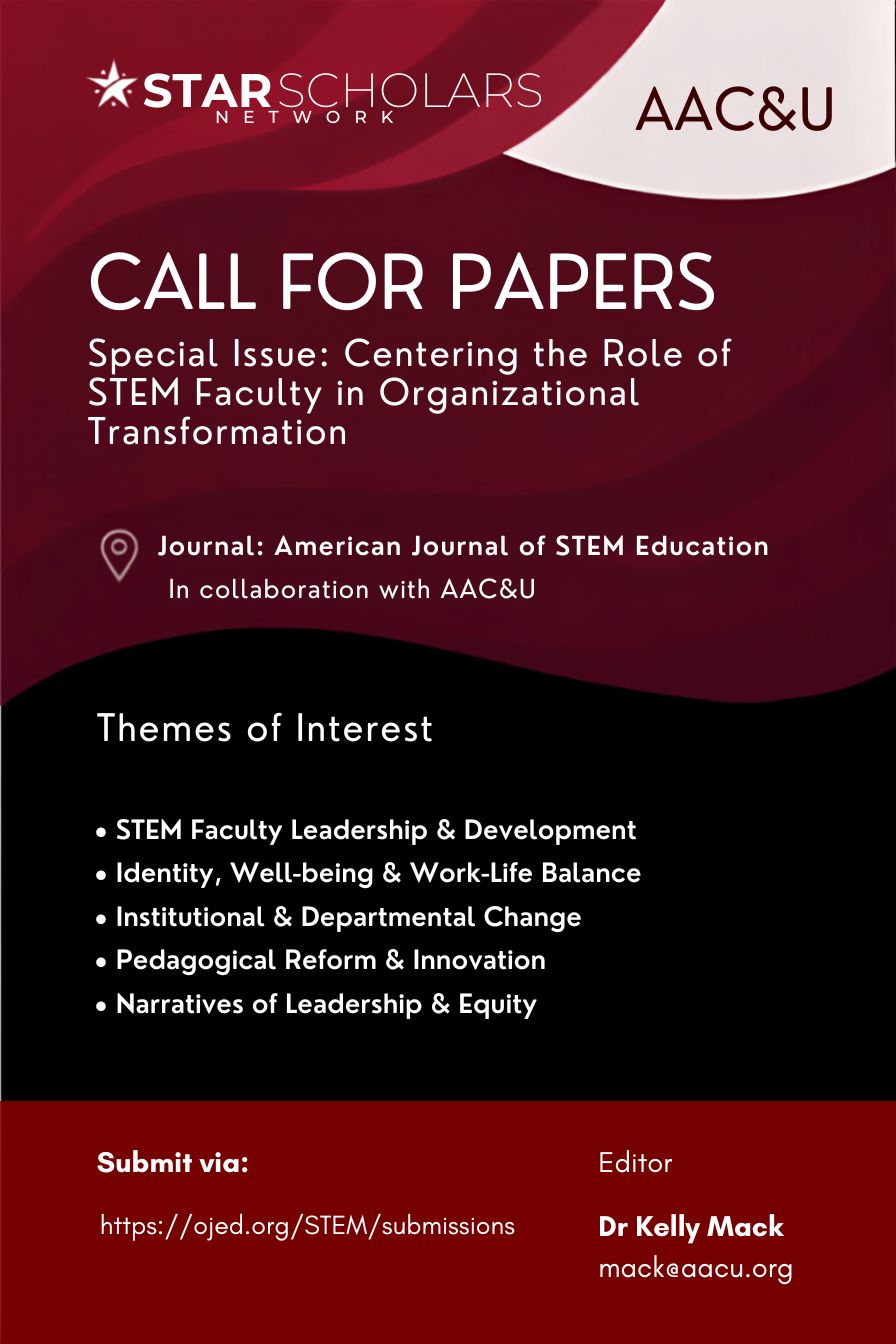
 Call for Special Issue Proposals