AI policy in higher education
Relational-affective considerations for governance in a Canadian university case study
DOI:
https://doi.org/10.32674/ndvc6674Keywords:
Generative Artificial Intelligence, Higher Education Policy, mixed-methods case study, STEM higher education, relational-affective dimensionAbstract
Generative artificial intelligence is reshaping higher education and raising new questions for policy, pedagogy, and governance, especially in STEM-related contexts. This mixed-methods case study examined faculty perceptions of the pedagogical, governance, and operational implications of AI at a Canadian university. Survey and focus group findings revealed limited current use, stronger anticipated future use, and widespread concerns about academic integrity, trust, workload, authenticity, and professional support. The analysis suggests that relational and affective conditions shape how AI policy is interpreted and enacted in academic practice. It further proposes that a relational-affective dimension may extend existing policy frameworks, particularly in STEM-oriented governance where technical judgement, accountability, and human oversight remain central.
References
Ahsan, Z. (2025). Integrating artificial intelligence into medical education: a narrative systematic review of current applications, challenges, and future directions. BMC medical education, 25(1), 1187. https://doi.org/10.1186/s12909-025-07744-0
An, Y., Yu, J. H., & James, S. (2025). Investigating the higher education institutions’ guidelines and policies regarding the use of generative AI in teaching, learning, research, and administration. International Journal of Educational Technology in Higher Education, 22(10). https://doi.org/10.1186/s41239-025-00507-3
Azevedo, L., Mallinson, D. J., Wang, J., Robles, P., & Best, E. (2024). AI Policies, Equity, and Morality and the Implications for Faculty in Higher Education. Public Integrity, 1–16. https://doi.org/10.1080/10999922.2024.2414957
Bender, E. M., Gebru, T., McMillan-Major, A., & Shmitchell, S. (2021). On the dangers of stochastic parrots: Can language models be too big? Proceedings of the 2021 ACM Conference on Fairness, Accountability, and Transparency, 610–623. https://doi.org/10.1145/3442188.3445922
Berdahl, L. (2025, March 27). AI is transforming university teaching, but are we ready for it? Universityaffairs.ca. https://universityaffairs.ca/opinion/ai-is-transforming-university-teaching-but-are-we-ready-for-it/
Bodenheimer, G., & Shuster, S. M. (2020). Emotional labour, teaching and burnout: Investigating complex relationships. Educational Research, 62(1), 63-76. https://doi.org/10.1080/00131881.2019.1705868
Bond, M., Khosravi, H., De Laat, M., Bergdahl, N., Negrea, V., Oxley, E., Pham, P., Chong, S. W., & Siemens, G. (2024). A meta systematic review of artificial intelligence in higher education: A call for increased ethics, collaboration, and rigour. International Journal of Educational Technology in Higher Education, 21(4). https://doi.org/10.1186/s41239-023-00436-z
Bozkurt, A., & Sharma, R. C. (2024). Trust, credibility and transparency in human-AI interaction: Why we need explainable and trustworthy AI and why we need it now. Asian Journal of Distance Education, 19(2). https://www.asianjde.com/ojs/index.php/AsianJDE/article/view/819
Braun, V., & Clarke, V. (2006). Using thematic analysis in psychology. Qualitative Research in Psychology, 3(2), 77–101. https://doi.org/10.1191/1478088706qp063oa
Buçinca, Z., Malaya, M. B., & Gajos, K. Z. (2021). To trust or to think: cognitive forcing functions can reduce overreliance on AI in AI-assisted decision-making. Proceedings of the ACM on Human-computer Interaction, 5(CSCW1), 1-21. https://doi.org/10.1145/344928
Buele, J., & Llerena-Aguirre, L. (2025). Transformations in academic work and faculty perceptions of artificial intelligence in higher education. Frontiers in Education. 10. https://doi.org/10.3389/feduc.2025.1603763
Cavendish, C. (2023, January 20). ChatGPT will force school exams out of the dark ages. Financial Times. https://www.ft.com/content/41243091-d8d7-4b74-9ad1-5341c16c869f
Cetina, K. K. (1999). Epistemic cultures: How the sciences make knowledge. harvard university press.
Chan, C. K. Y. (2023). A comprehensive AI policy education framework for university teaching and learning. International Journal of Educational Technology in Higher Education, 20(1). https://doi.org/10.1186/s41239-023-00408-3
Chan, C. K. Y., & Colloton, T. (2024). Generative AI in higher education: The ChatGPT effect. Routledge. https://doi.org/10.4324/9781003459026
Chan, C. K. Y., & Hu, W. (2023). Students’ voices on generative AI: Perceptions, benefits, and challenges in higher education. International Journal of Educational Technology in Higher Education, 20(43). https://doi.org/10.1186/s41239-023-00411-8
Chan, C. K. Y., & Lee, K. K. (2023). The AI generation gap: Are Gen Z students more interested in adopting generative AI such as ChatGPT in teaching and learning than their Gen X and millennial generation teachers?. Smart learning environments, 10(1), 60. https://doi.org/10.1186/s40561-023-00269-3
Chan, K. S., & Zary, N. (2019). Applications and challenges of implementing artificial intelligence in medical education: integrative review. JMIR medical education, 5(1), e13930. https://doi.org/10.2196/13930
Creswell, J. W., & Plano Clark, V. L. (2023). Revisiting mixed methods research designs twenty years later. Handbook of Mixed Methods Research Designs, 1(1), 21–36.
Crompton, H., & Burke, D. (2023). Artificial intelligence in higher education: the state of the field. International journal of educational technology in higher education, 20(1), 22. https://doi.org/10.1186/s41239-023-00392-8
Dai, Y., Lai, S., Lim, C. P., & Liu, A. (2024). University policies on generative AI in Asia: Promising practices, gaps, and future directions. Journal of Asian Public Policy. 18(2), 260-281. https://doi.org/10.1080/17516234.2024.2379070
Eaton, S. E. (May 29, 2023). Academic Integrity in the Age of Artificial Intelligence [Keynote presentation]. Open Technology in Education, Society, and Scholarship Association (OTESSA), York University, ON. https://dx.doi.org/10.11575/PRISM/dspace/41407
Fragiadakis, G., Diou, C., Kousiouris, G., & Nikolaidou, M. (2024). Evaluating human-ai collaboration: A review and methodological framework. arXiv preprint arXiv:2407.19098. https://doi.org/10.48550/arXiv.2407.19098
Gulson, K. N., Sellar, S., & Webb, P. T. (2022). Algorithms of education: How datafication and artificial intelligence shape policy. University of Minnesota Press.
Hargreaves, A. (2000). Mixed emotions: Teachers’ perceptions of their interactions with students. Teaching and Teacher Education, 16(8), 811–826. https://doi.org/10.1016/S0742-051X(00)00028-7
Holmes, W., Bialik, M., & Fadel, C. (2019). Artificial intelligence in education promises and implications for teaching and learning. Center for Curriculum Redesign.
Jin, Y., Yan, L., Echeverria, V., Gašević, D., & Martinez-Maldonado, R. (2025). Generative AI in higher education: A global perspective of institutional adoption policies and guidelines. Computers and Education: Artificial Intelligence, 8, 100348. https://doi.org/10.1016/j.caeai.2024.100348
Kahn, P., Moreau, M. P., & Gagnon, J. (2024). Precarity and illusions of certainty in higher education teaching. Teaching in Higher Education, 29(3), 699-706. https://doi.org/10.1080/13562517.2024.2326403
Kariou, A., Koutsimani, P., Montgomery, A., & Lainidi, O. (2021). Emotional labor and burnout among teachers: A systematic review. International journal of environmental research and public health, 18(23), 12760. https://doi.org/10.3390/ijerph182312760
Kelchtermans, G. (2005). Teachers’ emotions in educational reforms: Self-understanding, vulnerable commitment and micropolitical literacy. Teaching and Teacher Education, 21(8), 995–1006. https://doi.org/10.1016/j.tate.2005.06.009
Kizilcec, R. F. (2024). To advance AI use in education, focus on understanding educators. International Journal of Artificial Intelligence in Education, 34, 12–19. https://doi.org/10.1007/s40593-023-00351-4
Knox, J. (2020). Artificial intelligence and education futures: Critical perspectives. Routledge.
Latour, B., Salk, J., & Woolgar, S. (2013). Laboratory life: The construction of scientific facts. Princeton University Press.
Li, Z., & Zhang, W. (2025). Technology in education: Addressing legal and governance challenges in the digital era. Education and Information Technologies, 30(7), 8413-8443. https://doi.org/10.1007/s10639-024-13036-9
Luckin, R. (2025). Nurturing human intelligence in the age of AI: rethinking education for the future. Development and Learning in Organizations: An International Journal, 39(1), 1-4. https://doi.org/10.1108/DLO-04-2024-0108
Mah, D.-K., & Groß, N. (2024). Artificial intelligence in higher education. International Journal of Educational Technology in Higher Education, 21, 58. https://doi.org/10.1186/s41239-024-00490-1
Moore, S., & Lookadoo, K. (2024). Communicating clear guidance: Advice for generative AI policy development in higher education. Business and Professional Communication Quarterly, 87(4), 610–629. https://doi.org/10.1177/23294906241254786
Moorhouse, B. L., Yeo, M. A., & Wan, Y. (2023). Generative AI tools and assessment. Computers and Education Open, 5, 100151. https://doi.org/10.1016/j.caeo.2023.100151
Mosly, I. (2024). Artificial intelligence’s opportunities and challenges in engineering curricular design: A combined review and focus group study. Societies, 14(6), 89. https://doi.org/10.3390/soc14060089
Nazaretsky, T., Mejia-Domenzain, P., Swamy, V., Frej, J., & Käser, T. (2025). The critical role of trust in adopting AI-powered educational technology for learning: An instrument for measuring student perceptions. Computers and Education: Artificial Intelligence, 8, 100368. https://doi.org/10.1016/j.caeai.2025.100368
Noble, S. U. (2018). Algorithms of oppression: How search engines reinforce racism. NYU Press.
Opesemowo, O. A., & Ndlovu, M. (2024). Artificial intelligence in mathematics education: The good, the bad, and the ugly. Journal of Pedagogical Research, 8(3), 333-346. https://doi.org/10.33902/JPR.202426428
Pellegrini, C., et al. (2023). AI in medical education: Global situation, effects, and challenges. Education and Information Technologies, 28, 12345–12368. https://doi.org/10.1007/s10639-023-12009-8
Plata, S., De Guzman, M. A., & Quesada, A. (2023). Emerging research and policy themes on academic integrity. Asian Journal of University Education, 19(4), 743–757. https://ir.uitm.edu.my/id/eprint/111992
Schiff, D. (2022). Education for AI, not AI for education: The role of education and ethics in national AI policy strategies. International Journal of Artificial Intelligence in Education, 32(3), 527-563. https://doi.org/10.1007/s40593-021-00270-2
Schutz, P.A., Zembylas, M. (2009). Introduction to Advances in Teacher Emotion Research: The Impact on Teachers’ Lives. In: Schutz, P., Zembylas, M. (eds) Advances in Teacher Emotion Research (pp. 3-11). Springer, Boston, MA. https://doi.org/10.1007/978-1-4419-0564-2_1
Selwyn, N., Hillman, T., Eynon, R., Ferreira, G., Knox, J., Macgilchrist, F., & Sancho-Gil, J. M. (2024). Digital education in the AI era: Critical perspectives on technology and policy. Learning, Media and Technology, 49(1), 1–15. https://doi.org/10.1080/17439884.2023.2260138
Smith, L. T. (2021). Decolonizing methodologies: Research and Indigenous peoples (3rd ed.). Bloomsbury Publishing.
Songkram, N., Chootongchai, S., Keereerat, C., & Songkram, N. (2024). Potential of ChatGPT in academic research: exploring innovative thinking skills. Interactive Learning Environments, 33(2), 1689–1711. https://doi.org/10.1080/10494820.2024.2375342
Truth and Reconciliation Commission of Canada. (2015). Honouring the truth, reconciling for the future: Summary of the final report of the Truth and Reconciliation Commission of Canada. Government of Canada. https://publications.gc.ca/collections/collection_2015/trc/IR4-7-2015-eng.pdf
UNESCO. (2021). AI and education: Guidance for policy-makers. UNESCO. https://doi.org/10.54675/PCSP7350
UNESCO. (2023). Education in the age of artificial intelligence. The UNESCO Courier. https://courier.unesco.org/en/articles/education-age-artificial-intelligence
University of British Columbia. (2024). Principles and guidelines for Generative Artificial Intelligence (GenAI) in teaching and learning. University of British Columbia. https://genai.ubc.ca/guidance/
Westphal, M., Vössing, M., Satzger, G., Yom-Tov, G. B., & Rafaeli, A. (2023). Decision control and explanations in human-AI collaboration: Improving user perceptions and compliance. Computers in Human Behavior, 144, 107714. https://doi.org/10.1016/j.chb.2023.107714
Yin, X., Zhao, Y., & Gao, L. (2025). Integrating artificial intelligence in engineering education: Opportunities and challenges. Societies, 14(6), 89. https://doi.org/10.3390/soc14060089
Zawacki-Richter, O., Marín, V. I., Bond, M., & Gouverneur, F. (2019). Systematic review of research on artificial intelligence applications in higher education. International Journal of Educational Technology in Higher Education, 16(1), 39. https://doi.org/10.1186/s41239-019-0171-0
Zhang, W., Cai, M., Lee, H. J., Evans, R., Zhu, C., & Ming, C. (2024). AI in Medical Education: Global situation, effects and challenges. Education and Information Technologies, 29(4), 4611-4633. https://doi.org/10.1007/s10639-023-12009-8
Zhu, S., Liu, X., & Zhang, Y. (2025). Integrating AI into medical education: A narrative review. BMC Medical Education, 25, 7744. https://doi.org/10.1186/s12909-025-07744-0
Additional Files
Published
Issue
Section
License
Copyright (c) 2026 Dr. Johanathan Woodworth, Dr. Emily Ballantyne

This work is licensed under a Creative Commons Attribution 4.0 International License.
Copyright (c) [year] [author]
This work is licensed under a Creative Commons Attribution 4.0 International License.
This license permits unrestricted use, distribution, and reproduction in any medium, provided the original author and source are credited. https://creativecommons.org/licenses/by/4.0
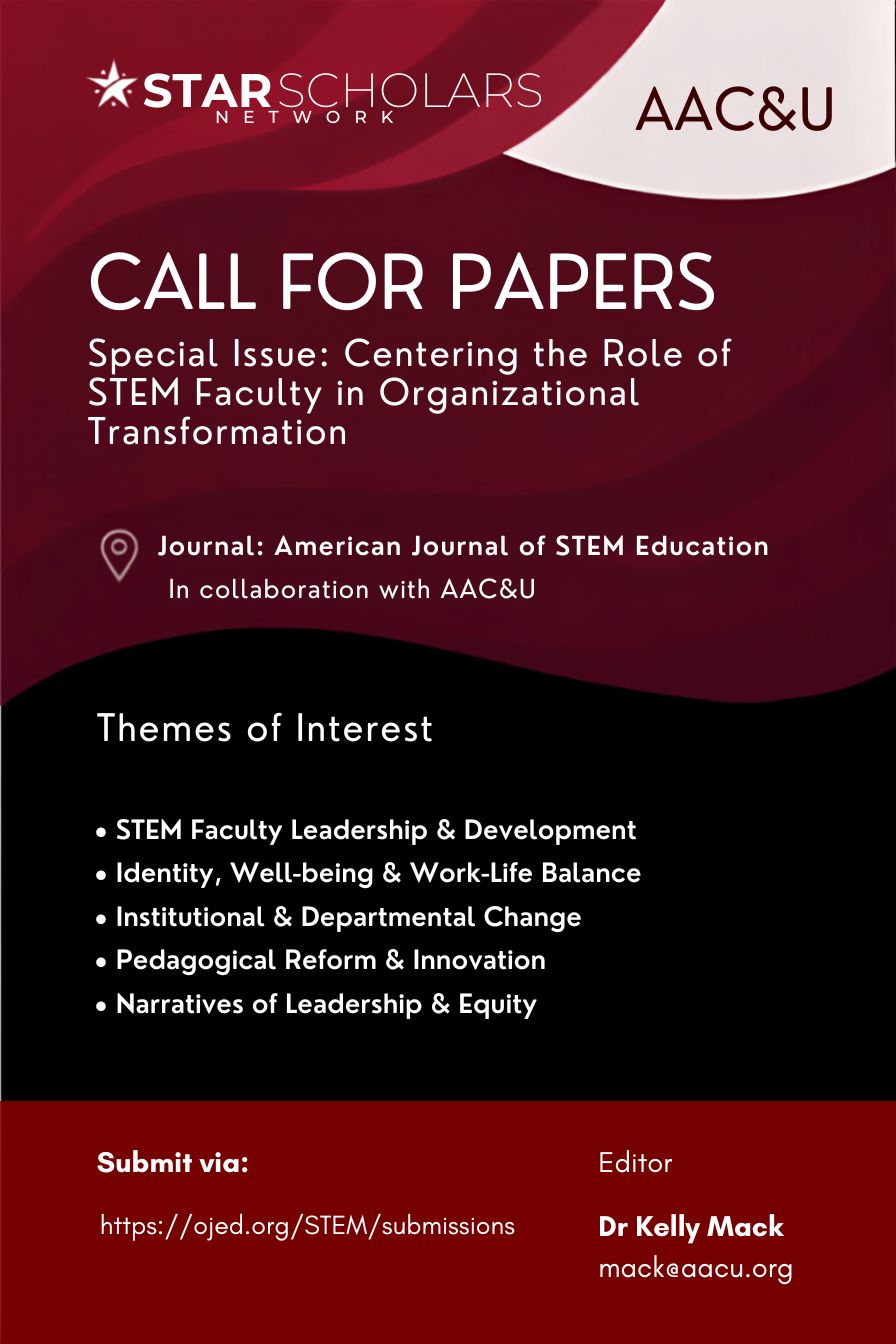
 Call for Special Issue Proposals