From tool to digitized co-conspirator
A reflective analysis of GPT-based engagement with educational equity
DOI:
https://doi.org/10.32674/jxz8hn16Keywords:
Artificial Intelligence, critical consciousness, equity, design symbiosis, human-in-the-loop, policy violenceAbstract
This essay explores artificial intelligence as infrastructure for liberatory leadership through My Partner in Equity, a custom GPT developed in 2023 and refined over 21 months. Drawing on Freire’s critical consciousness, this analysis examines how AI design paradigms can shift from architecture-style (autonomous) to equity-style (human-in-the-loop) approaches. Through documentation across three phases, findings suggest AI’s potential to facilitate transformative dialogue while supporting vocabulary development and critical consciousness. However, tensions arise around emotional authenticity, model transparency, and platform dependence. This work demonstrates “design symbiosis”—mutually beneficial relationships between humans and AI that respect human voice, emotional labor, and ethical boundaries. While acknowledging contradictions of using potentially exploitative AI for liberation goals, this analysis urges educators to view AI as partners in practice.
References
Ball, S. J. (2006). Education policy and social class: The selected works of Stephen J. Ball. Routledge. DOI: https://doi.org/10.4324/9780203015179
Björgvinsson, E., Ehn, P., & Hillgren, P.-A. (2010). Participatory design and “democratizing innovation.” Proceedings of the 11th Biennial Participatory Design Conference on - PDC ’10. https://doi.org/10.1145/1900441.1900448 DOI: https://doi.org/10.1145/1900441.1900448
Buolamwini, J. (2024). Unmasking AI: My mission to protect what is human in a world of machines. Random House.
Chetty, R., Hendren, N., Kline, P., & Saez, E. (2014). Where is the land of opportunity? The Quarterly Journal of Economics, 129(4), 1553-1623. https://doi.org/10.1093/qje/qju022 DOI: https://doi.org/10.1093/qje/qju022
Costanza-Chock, S. (2020). Design justice: Community-led practices to build the worlds we need. MIT Press. DOI: https://doi.org/10.7551/mitpress/12255.001.0001
Eubanks, V. (2018). Automating inequality: How high-tech tools profile, police, and punish the poor. St. Martin's Press.
Freire, P. (1970). Pedagogy of the oppressed. Continuum International Publishing Group.
Gillborn, D. (2005). Education policy as an act of white supremacy: Whiteness, critical race theory and education reform. Journal of Education Policy, 20(4), 485–505. https://doi.org/10.1080/02680930500132346 DOI: https://doi.org/10.1080/02680930500132346
Holmes, W., Bialik, M., & Fadel, C. (2019). Artificial intelligence in education. Center for Curriculum Redesign. DOI: https://doi.org/10.1007/978-3-319-60013-0_107-1
Lorde, A. (1984). The master’s tools will never dismantle the master’s house. In Sister outsider: Essays and speeches (pp. 110-114). Crossing Press.
Roberts, S. T. (2019). Behind the screen: Content moderation in the shadows of social media. Yale University Press. DOI: https://doi.org/10.12987/9780300245318
Sanders, E. B. N., & Stappers, P. J. (2008). Co-creation and the new landscapes of design. CoDesign, 4(1), 5-18. https://doi.org/10.1080/15710880701875068 DOI: https://doi.org/10.1080/15710880701875068
Toldson, I. A. (2019). No BS (Bad Stats): Black people need people who believe in Black people enough not to believe every bad thing they hear about Black people. Brill. DOI: https://doi.org/10.1163/9789004397040
Zawacki-Richter, O., Marín, V. I., Bond, M., & Gouverneur, F. (2019). Systematic review of research on artificial intelligence applications in higher education – where are the educators? International Journal of Educational Technology in Higher Education, 16(1), 1–27. https://doi.org/10.1186/s41239-019-0171-0 DOI: https://doi.org/10.1186/s41239-019-0171-0
Additional Files
Published
Issue
Section
License
Copyright (c) 2026 Authors

This work is licensed under a Creative Commons Attribution 4.0 International License.
Copyright (c) [year] [author]
This work is licensed under a Creative Commons Attribution 4.0 International License.
This license permits unrestricted use, distribution, and reproduction in any medium, provided the original author and source are credited. https://creativecommons.org/licenses/by/4.0
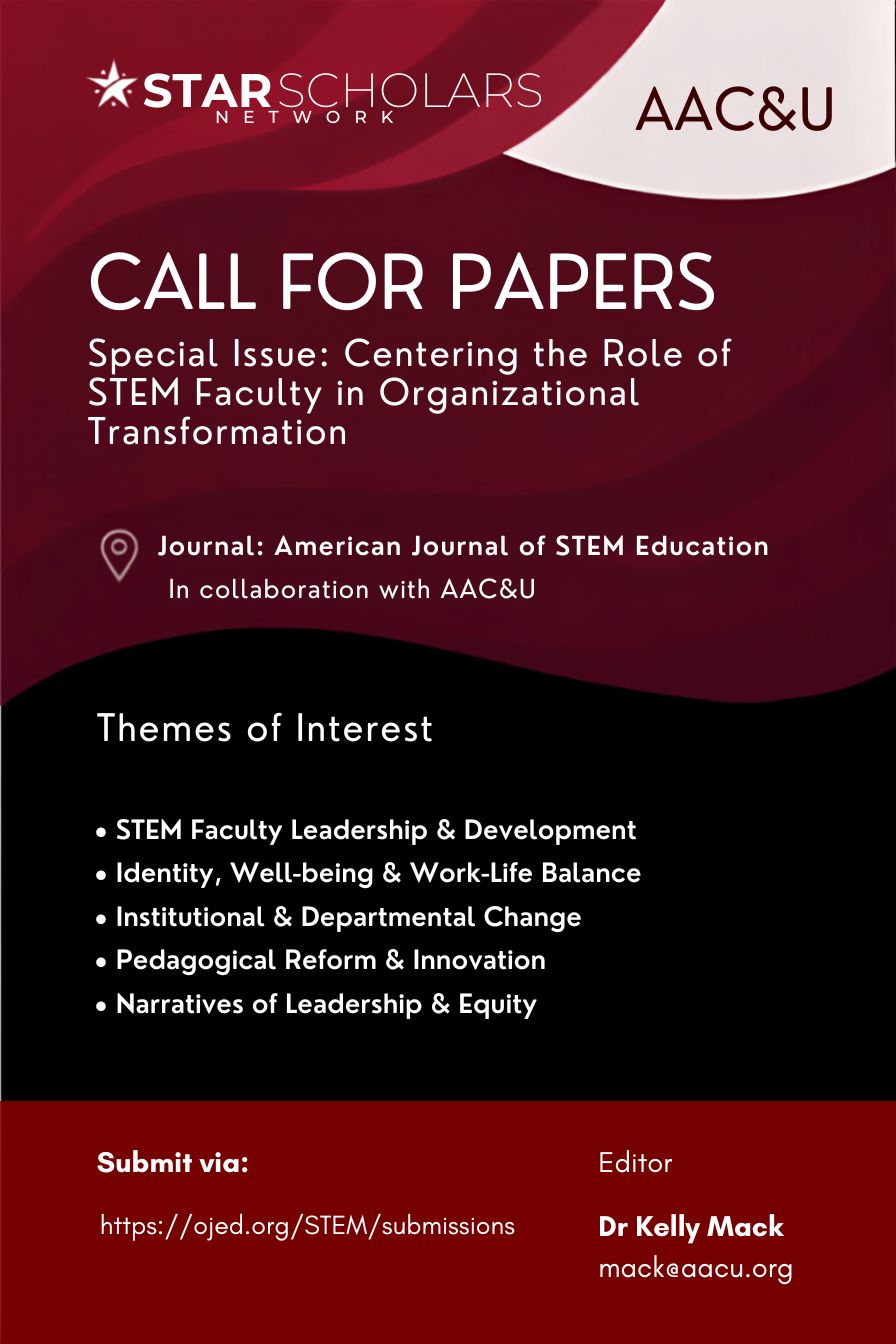
 Call for Special Issue Proposals