Frequently Asked Questions
What is the Journal of Interdisciplinary Studies in Education (JISE)?
As a Scopus-indexed Q1 publication, the Journal of Interdisciplinary Studies in Education (JISE) is a peer-reviewed, interdisciplinary, open-access journal published by STAR Scholars Press in Baltimore, Maryland, USA. JISE publishes empirical research that connects education with multiple disciplinary perspectives and addresses important educational issues across national and international contexts.
Online ISSN: 2690-0408 | Print ISSN: 2166-2681
What topics does JISE publish?
JISE welcomes high-quality interdisciplinary research across five major areas:
-
Education, Technology, and Scientific Innovation
-
Education, Society, and Cultural Contexts
-
Education, Policy, and Economic Systems
-
Education, Health, and Human Development
-
International/Global Higher Education
Topics may include artificial intelligence, digital transformation, cybersecurity, scientific innovation, culture, identity, migration, civic engagement, public policy, workforce development, entrepreneurship, mental health, neurodiversity, inclusive education, global health, international collaboration, academic diplomacy, leadership, equity, and global higher education.
What types of manuscripts does JISE publish?
JISE primarily publishes empirical research articles using quantitative, qualitative, mixed-methods, and other appropriate research designs.
Beginning with the 2024 editions, JISE generally does not publish:
-
Brief reflective essays
-
Opinion papers
-
Manuscripts based only on literature reviews without an empirical component
Which citation style should I use?
Manuscripts should follow the journal’s current author guidelines (APA) and manuscript template. Authors should carefully review formatting and reference requirements before submission.
Should I use the JISE manuscript template?
Yes. Authors are strongly encouraged to prepare their manuscript using the official JISE manuscript template before submission.
Using the template helps ensure consistency in formatting and can reduce delays during editorial screening and production.
Is there a fee to submit a manuscript?
No. There is no submission fee. An Article Processing Charge is assessed only after a manuscript has successfully completed peer review and has been accepted for publication.
What are the current Article Processing Charges?
-
Student first author: USD $100
-
Faculty and independent scholars: USD $500
-
Grant-funded projects: USD $2,500
Grant-funded projects may include research supported by agencies or organizations such as NSF, NIH, government agencies, foundations, or comparable external funding sources.
What does the APC cover?
The Article Processing Charge supports:
-
Editorial administration
-
Peer-review coordination
-
Professional copyediting
-
Typesetting and production
-
DOI registration
-
Digital preservation
-
Indexing support
-
Online publication
-
Long-term open-access hosting
Are APC discounts or waivers available?
Yes. JISE recognizes that financial circumstances vary considerably across institutions and countries. Authors may request consideration for a discount or partial waiver if they are:
-
From the Global South
-
Based at a low-resource institution
-
Experiencing significant financial hardship
-
Eligible for institutional or partnership support
Reviewers may also qualify for APC credits under applicable journal policies.
All requests are handled confidentially and do not influence editorial decisions.
Do partner institutions receive APC benefits?
Partner institutions may qualify for reduced or waived Article Processing Charges for affiliated authors, depending on the terms of the institutional partnership.
Can grant funds be used to pay the APC?
Yes. Authors are encouraged to check whether their research grants, universities, libraries, or funding agencies provide support for open-access publishing.
Is JISE Open Access?
Yes. JISE is an open-access journal, allowing published research to be read widely without subscription barriers.
Published articles receive a DOI and are made available through the journal’s online platform.
Is JISE indexed in Scopus?
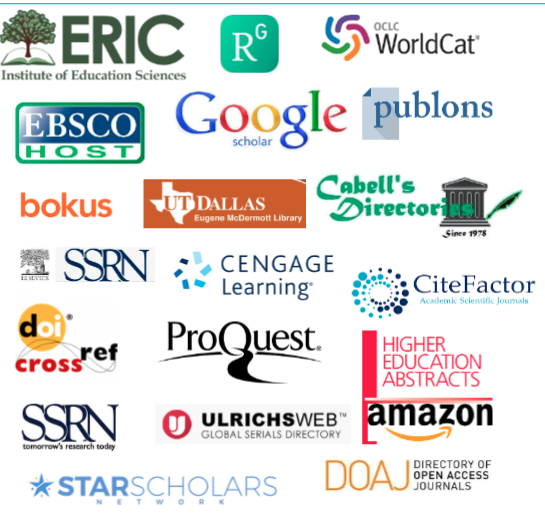
Yes. JISE is indexed in Scopus and is also listed or indexed in major scholarly databases and services including ProQuest, EBSCOHost, and Cabell’s Directory.
What is JISE's current ranking?
JISE is identified as a Scopus Q1 journal. Authors should consult current Scopus and SCImago records for the most recent citation and ranking information.
How many reviewers evaluate a manuscript?
Manuscripts normally undergo a rigorous double-blind peer-review process involving qualified scholars with expertise relevant to the submission. The exact number of reviewers (min 2-3) may vary depending on the manuscript and editorial requirements.
How long does the review process take?
JISE aims to provide an initial editorial decision within approximately 90 days of submission.
Actual timelines may vary depending on:
-
Reviewer availability
-
Number and complexity of revisions
-
Responsiveness of authors
-
Editorial workload
How quickly are accepted articles published?
JISE aims to publish accepted manuscripts in Online First within approximately 30 days after acceptance, subject to satisfactory completion of copyediting, typesetting, author proofs, and production requirements.
What is Online First publication?
Online First allows an accepted and finalized article to be published online before assignment to a regular journal issue. This helps authors make their research publicly available sooner.
Why are some manuscripts desk rejected?
A manuscript may be declined during initial editorial screening for reasons including:
-
The topic is outside JISE's scope
-
The manuscript is not interdisciplinary
-
The paper does not report empirical research
-
Author guidelines were not followed
-
The manuscript has major writing or organizational problems
-
The research question or contribution is insufficiently developed
-
The theoretical framework is weak or unclear
-
The methodology is inadequate
-
Ethical concerns are identified
-
Plagiarism or substantial originality concerns are detected
-
The manuscript is not sufficiently developed for external peer review
Desk rejection allows authors to receive an early decision rather than waiting through a lengthy review process.
Can I submit research using qualitative methods?
Yes. JISE welcomes rigorous qualitative research.
Can I submit quantitative or mixed-methods research?
Yes. JISE welcomes quantitative, qualitative, mixed-methods, and other rigorous empirical approaches appropriate to the research question.
Does JISE publish international research?
Yes. International and comparative perspectives are strongly encouraged.
JISE has received and published scholarship from researchers across more than 45 countries, with substantial representation from Asia, Africa, Europe, Australia, South America, and North America.
Does JISE welcome research from the Global South?
Yes. JISE strongly encourages scholarship from the Global South and seeks to broaden participation in international scholarly publishing. The journal particularly welcomes research that brings new regional, cultural, institutional, and disciplinary perspectives into global conversations about education.
Can I submit interdisciplinary research outside traditional education departments?
Yes. JISE is specifically designed to encourage interdisciplinary scholarship. Authors from fields such as technology, public policy, sociology, economics, health sciences, psychology, communication, international studies, STEM, business, and related areas are encouraged to submit research in which education is a central component.
Can I use artificial intelligence when preparing my manuscript?
All manuscripts with 50% or higher AI-generated text are automatically rejected. Authors may use artificial intelligence tools responsibly for appropriate purposes such as language editing, organization, or writing assistance.
Authors remain fully responsible for: Accuracy |Originality | Citations | Research integrity | Confidentiality | Ethical use of AI | Disclosure when required by journal policy
AI tools should not be listed as authors.
Does JISE publish special issues?
JISE may consider special issues or thematic collections that align closely with the journal's interdisciplinary mission. Prospective guest editors should contact the editorial office with a clearly developed theme, rationale, proposed editorial team, and anticipated contribution to the field.
Can I archive or share my published article?
Yes. Authors may share and archive their published work in accordance with JISE's open-access and licensing policies. Authors are encouraged to share the DOI rather than uploading unofficial or incomplete versions when possible.
How can I increase the visibility of my published article?
Authors are encouraged to:
-
Share the DOI through LinkedIn and other professional networks
-
Add the publication to ORCID and Google Scholar profiles
-
Share it through institutional repositories where permitted
-
Present findings at conferences and webinars
-
Include the DOI in CVs and professional webpages
-
Share the article with relevant scholarly associations and research networks
-
Ask institutional communications offices or libraries to feature the publication
Why publish with JISE?
JISE offers authors:
-
Publication in a Scopus-indexed interdisciplinary education journal
-
Global readership across approximately 110 countries
-
Access to the STAR Scholars Network community of more than 33,000 members
-
Rigorous peer review
-
Open-access publication
-
Online First publication
-
International visibility
-
Broad interdisciplinary reach
-
An inclusive editorial environment
-
Opportunities to reach scholars across multiple academic fields
Who should I contact with questions?
For questions about submissions, peer review, APCs, waivers, institutional partnerships, or publication matters, please contact:
Journal of Interdisciplinary Studies in Education
STAR Scholars Press
Baltimore, Maryland, USA
Email: poudel@starscholars.org